
Measuring Progress Event 2025 – what did we learn?
Each year our Measuring Progress Event (MPE) brings together WISE Members to benchmark, share insights, and learn from each other. It’s not just about comparing scores—it’s about understanding what drives real change in gender equity and inclusion.
This year’s event at IET Birmingham: Austin Court brought together leaders and practitioners to explore what’s working, what’s not, and how we can accelerate progress across the sector.
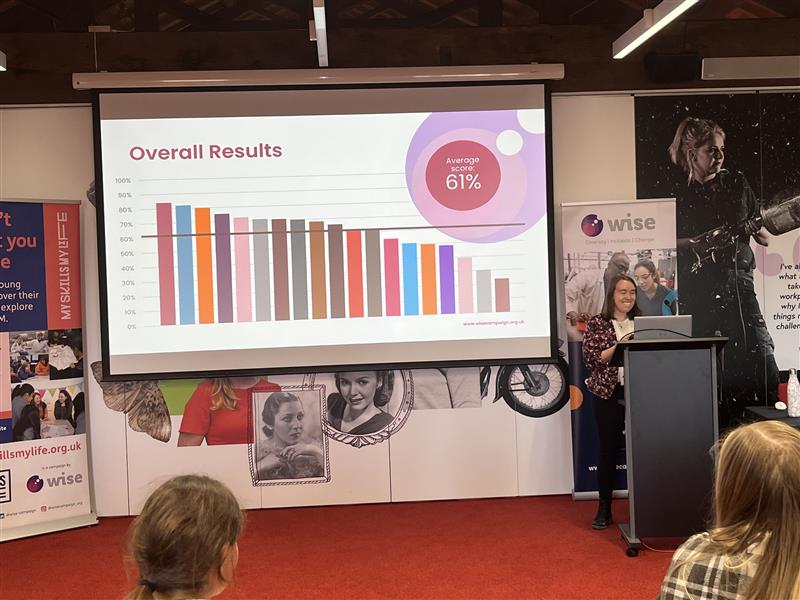
Katherine Watson, WISE Knowledge and Impact Manager, led the day sharing insights from the data gathered from our Gender Equity Framework HR Diagnostic.
We broke out into groups to discuss key themes from each of the five pillars: Data, Attraction, Progression, Retention and Engagement.
Here are a few of the key takeaways from each pillar:
Data
We’re great at collecting data, but how are we using it? Many organisations aren’t utilising the information they have to create impact. A “you said, we did” approach helps to build trust with employees by showing that their diversity data and feedback will be and is, used to provide better support and experience in the workplace.
- Trust is critical
- Clarity of purpose drives engagement
- Communication is essential. Ensure you try different methods to reach all employees, even those on-site in hard-to-reach places
- Use data as proof points to create change and demonstrate impact.
Attraction
Support for your managers matter. Whilst inclusive recruitment practices such as removing gender bias from job descriptions and showcasing the great perks your organisation offers are a great way to attract diverse talent, hiring and people managers are the gatekeepers to getting the right talent on board.
- Training needs to be timely and easy to access. Hiring managers may only recruit a handful of times in their career so ensure training is available when they need it and a refresher is provided before each recruitment cycle
- Be loud and proud about all the great things on offer within your organisation
- Attraction is an investment. Whether it’s putting time and resource into outreach, proactively searching across the globe for the right person or getting to know them through interviews to make sure they’re the right fit. It all costs money and time.
Progression
Progressions looks different for everyone. It’s not always about promotions or being a leader; it’s about learning new skills and being given opportunities regardless of where you are in your career.
- Typical promotion processes don’t work for all organisations. Do what fits your roles and culture. Play a proactive role in spotting talent and take the onus off the individual to have to prove their worth
- Recognise the skills and experience employees get from all types of growth opportunities. Formal programmes are great but don’t overlook those who are going above and beyond outside of their role, whether that’s leading an Employee Resource Group or being a spokesperson for the organisation at external engagements such as outreach opportunities
- Mentoring and coaching are hugely valuable and benefit the organisation just as much as the individuals involved.
Retention
Culture is essential to retaining talent and ensuring the happiness of the workforce. There is often a disconnect between what is offered and what is utilised, ensure that policies and processes are simple and easy to access for all.
- Value the person, not just the role. Be flexible and personal where possible. Everyone is unique so don’t take a one size fits all approach
- Educate everyone. Allyship is a powerful tool and makes inclusivity everyone’s responsibility
- Utilise feedback and lived experiences to make policies and support robust and effective. For example, you could test them out with ERGs to ensure they are fit for purpose.
Engagement
Research shows that women leaders are up to twice as likely to spend substantial time on EDI work that falls outside of their formal job responsibilities than their colleagues who are men. This effort deserves recognition and engagement is key to the success of the other four pillars.
- Celebrate success beyond a “well done”. Profile those who are doing great work, recognise it in their performance reviews and give them the credit they deserve for doing something that benefits the whole organisation
- There are currently five generations in the workforce (from Baby Boomers to Gen Z). Their lived experiences and perspectives on the world are completely different, but that doesn’t mean anyone should be left behind or given a free pass. Ensure you acknowledge differences and change your tack accordingly
- Use EDI champions to reach hard-to-access areas with a personal touch.
As you can see, we learnt a lot and progress is happening—but it requires commitment, creativity, and collaboration. Whether you’re a small organisation or a global corporation, the lessons shared prove that every step counts. Let’s keep the momentum going: use the insights, share your successes, and continue building workplaces where everyone can thrive.
If you’re a WISE member and you haven’t done your Gender Equity Framework diagnostic yet, please get in touch with SineadBarry@theiet.org.
If you’d like to know more about the WISE Gender Equity Framework and becoming a WISE member please email WISE@theiet.org.